Atilla
Management

Leadership with
a shared direction.

Strategic vision, financial oversight and technical expertise connected with day-to-day execution.

A coordinated leadership structure.

The Group’s management combines strategic direction with operational experience across sectors. Planning, delivery and financial control are aligned so that specialist companies can work within a common direction while responding to their own market and operating requirements.

Leadership responsibilities connect the long-term objectives of the business with the practical decisions of its teams, clients and partners. Technical knowledge and professional development support that connection as the Group grows across different regions.

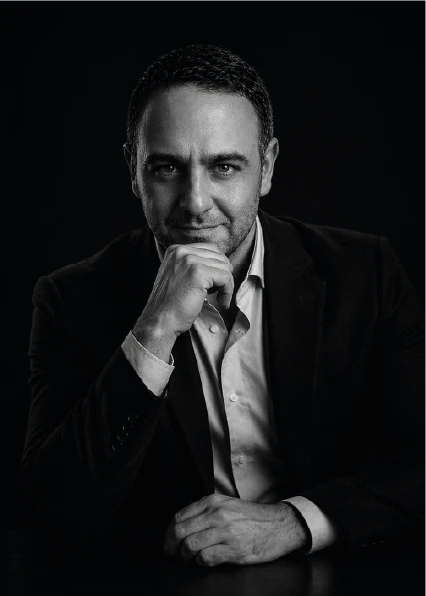
M. Attila Atilla

M. Attila Atilla

Chairman

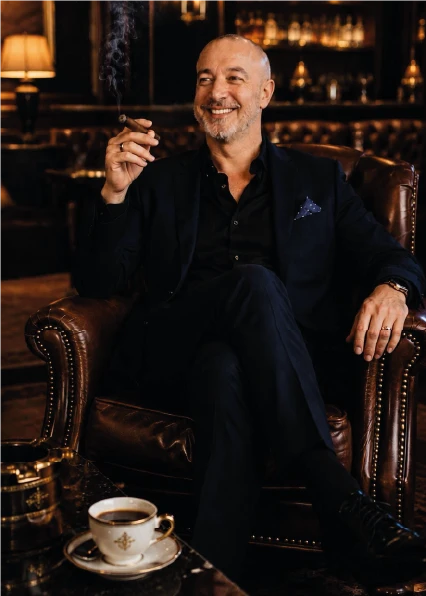
Akın Atilla

Akın Atilla

CEO, Board Member

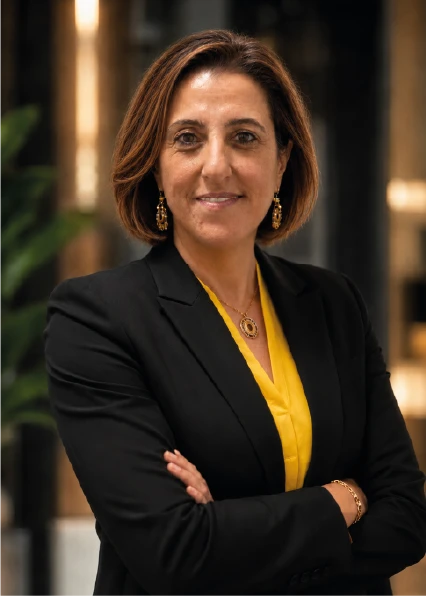
Nilüfer Atilla

Nilüfer Atilla

CFO, Board Member

Salim Arab

Salim Arab

CTO, Austria Director

Chairman’s message

M. Attila Atilla

To our clients, partners and colleagues,

Since 1976, our progress has depended on a simple but demanding principle: responsibility does not end when a contract is signed or when a building is handed over. It continues in the quality of the work, the usefulness of the result and the trust that remains between the parties. Our activities and geographies have expanded over the years, yet this understanding still defines how Atilla Group approaches every commitment.

Integrity is the foundation of that responsibility. We expect decisions to be clear, obligations to be understood and difficulties to be addressed openly. Quality is built through preparation, competent people, disciplined control and respect for detail. Safety and environmental responsibility are treated with the same seriousness, because a successful result cannot be separated from the way it is achieved or from the effects it leaves behind.

We also know that lasting work requires fairness. Clients, employees, consultants, suppliers and local partners must be able to rely on the standards by which we act. When interests differ, our task is to protect the purpose of the work without weakening trust or transferring avoidable risk to others.

Our strength is our team and the experience it carries from one assignment to the next. We will continue to invest in that knowledge, in the systems that make performance visible and in relationships that allow us to work responsibly across different markets. Growth is meaningful only when it strengthens our ability to keep our word, deliver with care and create value that remains useful over time.

M. Attila AtillaChairman
CEO’s message

Akın Atilla

Atilla Group's real advantage is not the number of fields in which it operates. It is the ability to bring different forms of knowledge into the same decision without weakening specialist responsibility. Development, design, engineering, construction, investment, production and market capability should not compete for influence; they should clarify the opportunity from different angles and expose issues while they can still be managed.

This is especially important in international work. Regulations, procurement structures, financing conditions, cultural expectations and operating practices vary from one country to another. We do not enter a market with a fixed formula. We begin by understanding the local reality, identifying the right people and establishing which standards must remain consistent. Local knowledge is not an accessory to international capability; it is one of its essential conditions.

Our role at Group level is to make priorities, responsibilities and decision rights visible. Each operating company must know what it owns and for which result it is accountable. At the same time, information must move quickly enough for the organisation to recognise risk, coordinate resources and respond before delay becomes cost or uncertainty becomes exposure.

We want Atilla Group to remain entrepreneurial in action and institutional in conduct. That balance requires speed, curiosity and the confidence to pursue new opportunities, but it also requires evidence, financial discipline and the willingness to stop when the conditions are not sound. We will measure progress by the quality of the organisations, projects and partnerships we build - and by their ability to remain relevant after the first period of success.

Akın AtillaCEO, Board Member
CFO’s message

Nilüfer Atilla

Financial discipline is what allows ambition to become durable value. At Atilla Group, finance is not asked to validate a decision after it has effectively been made. It joins the process at the beginning: testing assumptions, identifying the full capital requirement, examining cash timing and making clear which risks the organisation is being asked to carry.

That role becomes more important in a multi-sector and international structure. A construction programme, a property investment, a production activity and a new-market venture have different economics, yet they must still be compared through a common standard of evidence. Reliable reporting, consistent definitions and clear decision rights allow management to distinguish genuine progress from temporary movement and structural strength from favourable conditions.

Liquidity deserves particular attention. Growth can be profitable on paper and still create pressure if commitments, working capital, currency exposure and collection periods are not understood together. Financial planning therefore follows the operating reality: procurement schedules, contractual milestones, tax and compliance obligations, partner responsibilities and downside scenarios are incorporated into the decision rather than treated as later adjustments.

Our responsibility is to support entrepreneurial movement without weakening accountability. Capital should be released for a defined purpose, against visible milestones and with an agreed basis for review. The objective is not to eliminate uncertainty - no serious investment can do that - but to understand it early enough to make proportionate choices. In this way finance protects both the opportunity in front of us and the Group's capacity to act when the next one appears.

Nilüfer AtillaCFO, Board Member
CTO’s message

Salim Arab

Construction technology continues to advance, while clients and users rightly expect better performance, greater efficiency and more responsible use of resources. The technical challenge is not to adopt every new method. It is to identify which method solves a verified need, can be supported by the available supply chain and will continue to perform after the construction team has left.

Precast systems, light and heavy steel, reinforced concrete, tunnel formwork and industrialised components are tools, not identities. Their suitability depends on geometry, repetition, local manufacturing capacity, transport limits, lifting strategy, labour skills, programme and future maintenance. A solution that performs well in one country may be inappropriate in another. Technical judgement begins with the actual conditions of the project.

Coordination is equally important. Structural, architectural, mechanical, electrical and infrastructure decisions must be resolved as a common information set. Digital models and data improve this process only when responsibilities, review points and approval status are clear. Technology should reduce ambiguity at the interfaces; it should not add another layer of information that nobody owns.

Quality and safety are created through preparation. Method statements, samples, mock-ups, inspection plans, testing and commissioning translate design intent into verifiable work. Site observations and non-conformities must be treated as information for improvement, not simply as events to be closed.

Technical leadership therefore continues after delivery. Commissioning results, operational feedback and maintenance experience should return to the next design and procurement decision. Our aim is to improve certainty without closing the door to better methods - balancing time, cost and quality while protecting safety, durability and environmental responsibility.

Salim ArabCTO, Austria Director
Our perspective

Direction and delivery, working together.

01

Strategic & operational alignment

The coordinated management framework connects strategic planning, operational execution and financial control. Decisions made at Group level need to remain understandable to the operating companies and teams responsible for their implementation.

02

Financial oversight

The CFO role supports the relationship between business planning, resources and financial control. This perspective complements the technical and commercial direction of the Group, helping teams consider the requirements of growth and delivery together.

03

Technical development

Construction methods, engineering coordination and professional skills need to respond to changing project requirements. Technical leadership connects this development with practical decisions about time, cost, quality and the experience of the end user.

Discuss your business requirements.

Talk to us about a project, a product or a partnership.

Atilla

Explore Atilla Group.

Portfolio imagery may include architectural visualisations. Project status and the scope of the Group’s involvement are available on request.